Daily Planner KDP Interiors: A Template for Publishing Success
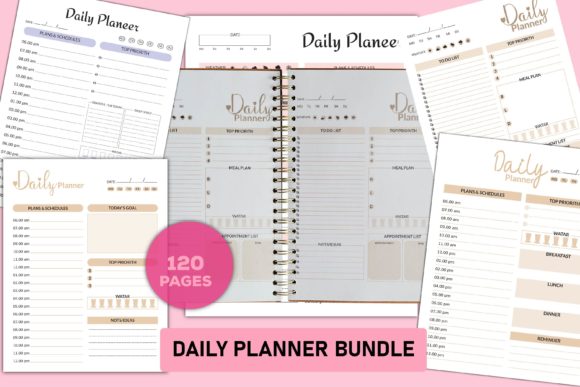
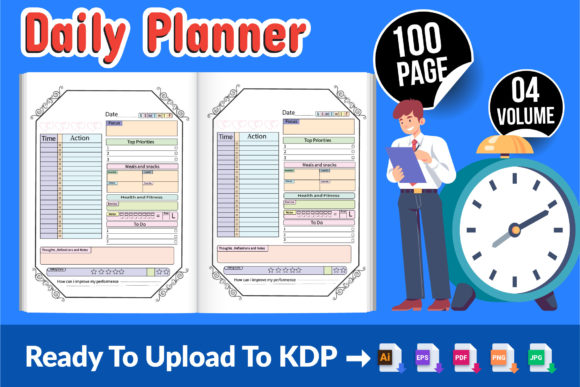
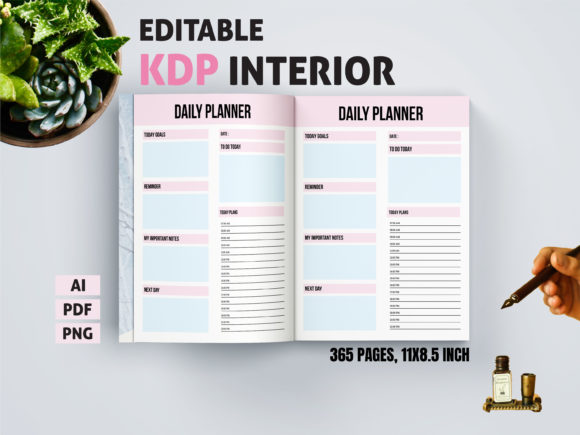
For entrepreneurs venturing into the world of Kindle Direct Publishing (KDP) with low or no-content books, the foundation of a product is its interior design. Daily Planner KDP Interiors Design refers to a pre-formatted, ready-to-use template specifically crafted for daily planner books. These are digital files, typically in PDF format, that contain the structured pages of a planner—calendar views, goal-setting sections, daily logs, and other organizational pages—already laid out and designed. The primary value is that they are tested and configured to meet KDP’s technical specifications, allowing a publisher to upload them directly after adding their cover, thereby skipping the complex design and formatting phase.
Understanding the Core Offering
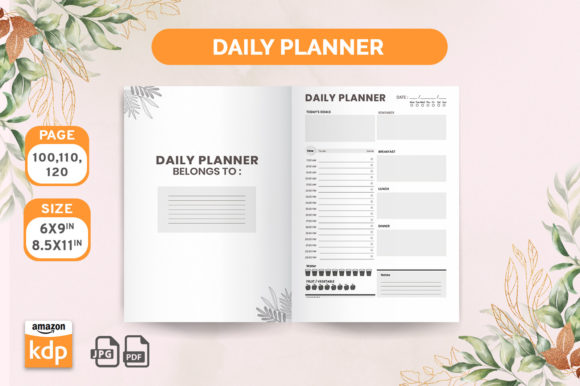
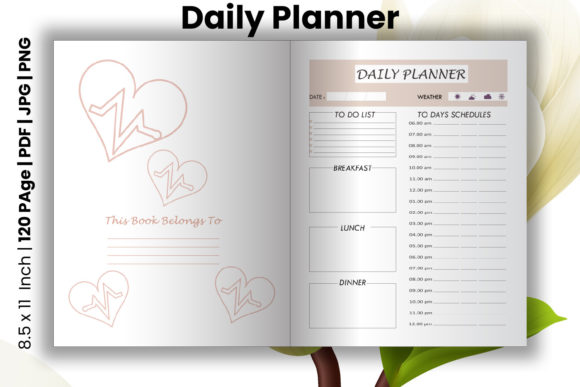
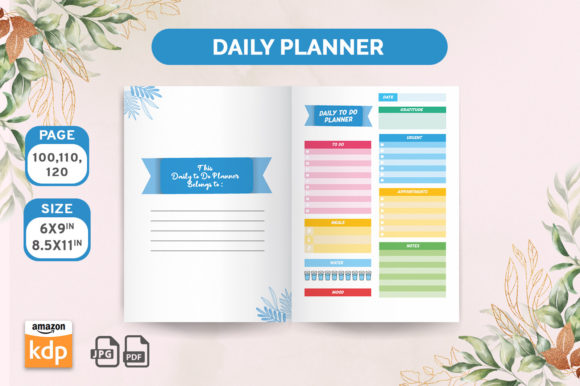
A typical Daily Planner KDP Interiors Design package is a complete interior template. It is not a physical book but the digital blueprint for one. As described in common specifications, these templates often come in popular trim sizes like 8.5" x 11" or 6" x 9" inches, with page counts such as 120, 110, or 100. They are designed with no bleed, meaning the content does not extend to the edge of the page, which is a standard requirement for many interior book formats on KDP. The files are provided as PDFs, ready for upload, and often include a "Belongs To Page" and other standard planner components. The key claim is that they have been tested on the KDP platform, aiming to reduce the technical hurdles of publishing.
Why Consider a Pre-Designed Interior Template?
Interest in Daily Planner KDP Interiors Design typically stems from specific publisher goals and constraints. The primary audience is individuals or small businesses building a low-content book business on KDP. Low-content books, like planners, journals, and logbooks, rely heavily on their interior structure and usability rather than original text. For these publishers, the main advantages are efficiency and reduced barrier to entry.
Using a pre-formatted interior drastically cuts down on the time and skill required to launch a product. One does not need expertise in graphic design or page layout software. It also mitigates the risk of technical rejection from KDP due to formatting errors, as the files are purportedly pre-tested. This allows the publisher to focus efforts on marketing, cover design, and building a portfolio of titles rather than on the intricate details of page margins and alignment. Furthermore, for those testing the market or operating with limited resources, it represents a low-cost initial investment compared to hiring a designer.
Benefits and Practical Tradeoffs
The clear benefit of Daily Planner KDP Interiors Design is streamlined production. It enables rapid publishing, which is crucial in a niche where many succeed by scaling through multiple titles. The assurance of proper dimensions and a tested file provides confidence, especially for new publishers.
However, this approach involves tradeoffs. The most significant is customization. While functional, these templates often offer a standard layout. Your book’s interior will be identical to others using the same template, potentially limiting its unique appeal in a crowded marketplace. The design choices—font styles, spacing, section ordering—are fixed. Another consideration is dependency. Your business model becomes reliant on the template provider’s quality and accuracy; if a file has an unnoticed error, it affects your product. Finally, while it removes design effort, it does not remove the need for careful review. Publishers must still ensure the template aligns with their specific planner concept and check the final PDF after any minor edits, like adding a title on the "Belongs To Page."
Expectations and Key Considerations
When opting for a Daily Planner KDP Interiors Design, set realistic expectations. You are purchasing a tool, not a finished product. Success will still depend on your cover design, keyword research, pricing, and overall marketing strategy. The interior is a core component, but in the low-content space, the cover often drives the initial customer click.
Before selecting a template, closely examine the specifications against your goals. Consider the page count: a 120-page planner may feel substantial, but a 100-page version might be more cost-effective for print. Decide on the trim size based on customer preference; the 6" x 9" size is often popular for handheld planners, while 8.5" x 11" suits those wanting ample writing space. Verify that the included pages match your planner’s purpose. Does it have monthly and daily spreads? Are there pages for goal setting, habit tracking, or notes? The content of the template dictates the functionality of your final book.
Situations Where It Is a Strong Fit
A Daily Planner KDP Interiors Design template is a particularly strong fit in several scenarios. For the absolute beginner with no design skills who wants to validate the KDP low-content market quickly, it is an efficient starting point. It is also well-suited for publishers who aim to scale by producing a large catalog of varied planners—using a reliable base template allows for swift iteration, perhaps by changing covers and themes for different niches (e.g., student planners, fitness planners, business planners).
Additionally, it fits those with limited time or budgetary constraints who cannot invest in custom design software or freelance designers. The template provides a professional-looking foundation without the associated costs or learning curve. If your primary strategy is to compete on volume, keywords, and cover appeal rather than on a uniquely innovative interior layout, then a pre-designed interior can be a perfectly adequate and strategic choice.
When Alternatives Might Be Worth Considering
Despite its utility, alternatives to Daily Planner KDP Interiors Design should be evaluated in certain contexts. If your goal is to build a brand with a distinct, recognizable interior style that stands out from competitors, investing in custom design is likely necessary. Using a unique template or hiring a graphic designer can create a proprietary look that becomes associated with your publishing brand.
Furthermore, if you possess basic skills in design tools like Canva, Adobe InDesign, or even Microsoft Word, you might create a simple interior yourself. KDP provides detailed guidelines and templates for margins. This route offers total control and avoids any costs for pre-made designs, though it requires time and a willingness to learn the technical requirements. Another alternative is to use more flexible KDP interior generators or software specifically for planners, which might offer more modular customization than a single fixed PDF file.
Finally, if the planner you envision includes complex elements like special charts, intricate calendars, or integrated artwork that a standard template does not support, a pre-made design may not suffice. In such cases, the tradeoff of time and cost for custom work aligns better with the project's ambitions.
Practical Decision-Making Insights
To determine if Daily Planner KDP Interiors Design aligns with your needs, conduct a simple self-assessment. First, clarify your primary objective: Is it speed to market, or is it product differentiation? Second, audit your resources: What is your skill level in design and formatting, and what is your available budget for tooling? Third, research the competition: Browse the top-selling planners in your target niche. Are their interiors highly varied and custom, or do they share common layouts? If they are similar, a template may suffice.
A practical step is to treat the first purchase as an experiment. Use a reliable Daily Planner KDP Interiors Design template for one title. Monitor its performance not just in sales, but also in the publishing process—was the upload seamless? Did customers comment on the interior layout? This hands-on test will provide the most valuable data on whether this approach supports your long-term goals. Remember, in KDP publishing, the interior is a critical part of the product experience, but it is one component in a system that includes cover, title, description, and audience targeting. Balancing attention across all these elements is key, whether you choose a pre-designed interior or an alternative path.