Streamlining Your KDP Design Process
Imagine transforming a blank page into a polished, market-ready product in minutes, not weeks. For entrepreneurs and creators diving into the low-content publishing world on Amazon KDP, efficiency is everything. That’s where the Bicycle Log Journal - KDP Interiors package comes into play, offering a foundational template designed to accelerate your workflow while maintaining a professional visual standard.
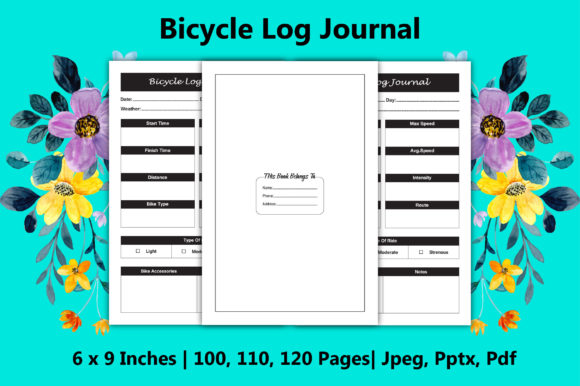
At its core, this product is more than just a template; it’s a pre-built design system. It provides a structured layout—with tested dimensions of 6 x 9 inches and multiple page count options—that establishes a clean visual hierarchy. This structure is crucial for any print design project, ensuring readability and a logical flow that guides the user’s experience from the first page to the last.
The Role of Templates in Modern Design Workflow
In today's fast-paced creative environment, starting from zero for every project is rarely practical. Professional graphic design often involves leveraging quality foundations to ensure consistency and speed. A well-designed interior template, like the Bicycle Log Journal KDP package, acts as a reliable starting point. It handles the essential layout decisions, freeing you to focus on customization, branding, and the specific market appeal of your journal.
Building Brand Consistency Across Formats
One of the biggest challenges in digital product creation is maintaining a cohesive brand identity. Whether you’re adapting the journal for different niches or creating companion products, using a consistent interior structure is key. The provided files (JPEG, PDF, PPTX) allow for straightforward customization. This means you can infuse your own color palette, adjust typography, or integrate subtle graphic elements to align the journal’s interior with your overall brand’s visual design, from your logo to your social media graphics.
Consider the practical applications:
- Speed to Market: With a KDP-ready PDF, your upload and approval process is streamlined.
- Design Flexibility: The PPTX files offer a canvas for those familiar with presentation software to easily modify layouts, add text boxes, or insert imagery.
- Quality Assurance: Being tested with Amazon KDP’s specifications means the technical settings—like having no bleed—are correctly configured, preventing costly publishing errors.
Applying Design Principles to Low-Content Products
A successful journal, even in the low-content space, relies on thoughtful editorial design. The visual hierarchy established by the template’s margins, line spacing, and page composition directly impacts usability. Good typography (even in a primarily black-and-white interior) and clear section delineation make the journal not just a notebook, but a useful tool for the end-user. This attention to user experience (UX) within a print product can significantly enhance its perceived value and customer satisfaction.
When selecting or customizing any design asset, evaluate it against your goals:
- Audience Expectations: Does the layout feel intuitive for its purpose (e.g., logging bicycle rides)?
- Scalability: Can the design be easily adapted for 100, 110, or 120 pages without breaking its visual cohesion?
- Professional Presentation: Does the final product look polished and trustworthy, encouraging purchases and repeat business?
The minimalist, tested aesthetic of this interior package provides a neutral foundation. It allows your market-specific branding and any added creative assets to shine, without competing with an overly complex or distracting background layout. This balance is essential in packaging design, web design, and indeed, in book interiors—the product’s “interface” is its pages.
Ultimately, the choice of foundational creative assets shapes your entire creative project. In a landscape where visual communication is paramount, using a reliable, professionally-prepared template isn’t just a shortcut; it’s a strategic design decision. It ensures that your focus remains on innovation and branding, while the underlying structure supports a clean, functional, and market-ready product. Investing in such resources elevates the final output, blending efficiency with a polished, modern aesthetic that resonates with today’s consumers.